
Based on an Infoquest Expert Voices interview with Chris Hyde, Data and Education Strategist
Most conversations about data in public education focus on the obvious wins: dashboards, league tables, test score analytics. But according to Chris Hyde, who has spent his career working across UK public sector roles, KPMG consulting, and most recently a strategic position at ADIC in the UAE, the real power of data in public education lies somewhere far less visible. It lies in the interventions you never see, because the problem they were designed to prevent never materialized.
The Case for Early Help: When Data Prevents the Problem
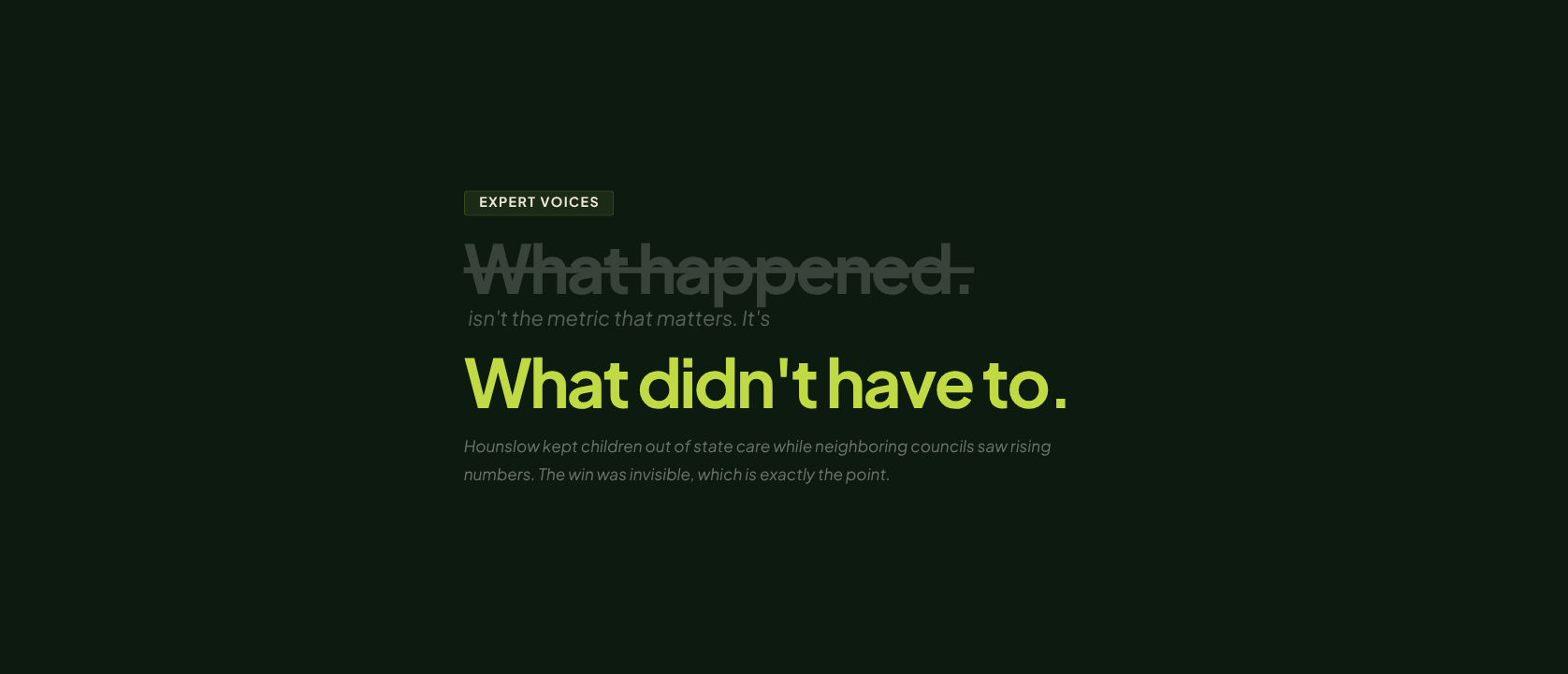
Hyde’s most striking example comes from Hounslow, a local government area in west London. Rather than concentrating resources on children already deep in crisis, Hounslow made a deliberate investment in early help: identifying families at risk before situations became acute. The result was notable. While other local councils saw rising numbers of children entering state care, Hounslow’s figures stayed flat.
This is the kind of win that doesn’t generate headlines. There’s no dramatic rescue, no visible transformation. The win is precisely the absence of the worst outcome, and it’s only visible if you were tracking the right data to begin with. Proving direct causation in social systems is always difficult, Hyde acknowledges, but the correlation is hard to ignore.
That framing shapes Hyde’s entire approach to public sector data. The metric that matters isn’t what happened, it’s what didn’t have to.
From the UK to the UAE: Data Strategy in an Emerging System
Hyde’s move from the UK to a strategic role at ADIC in Abu Dhabi brought him face to face with a very different set of challenges. The UAE’s education system is structured at the emirate level rather than nationally, which creates genuine coordination complexity. Different emirates have distinct demographics, different economies, and very different geographic realities. Abu Dhabi and Al Ain face needs that look nothing like metropolitan Dubai. Some areas contend with highly remote desert communities where finding qualified teachers is itself a logistical challenge.
The system is also younger than the UK’s. Compulsory education has a much shorter history in the UAE, which means the infrastructure, the culture of schooling, and the data landscape are still developing. Hyde describes his role at ADIC as helping align the organization’s strategy with the UAE’s national political aspirations while drawing on global best practices to support an emerging system. The core purpose, helping children and schools improve, remained consistent across both contexts. The tools and the terrain were entirely different.
Established
Emerging
Active focus area
Strength
Strength
Learn from UAE
Learn from UK
Attendance, Attainment, and the Data Gap in UAE Schools
One of Hyde’s priority areas at ADIC was school attendance. The UAE’s absence rates are significantly higher than those in the UK, driven partly by changes to the school week and the timing of holidays. The data tells a clear story: missed school days correlate directly with lower attainment and weaker performance on international assessments like PISA and TIMSS.
Addressing this required creative thinking about exam scheduling, shifting incentives so that students had a tangible reason to be present at key moments in the academic calendar. It’s a practical example of how data doesn’t just diagnose a problem; it can reshape the conditions that cause it.
42 Abu Dhabi: Building Future Skills Through Peer-to-Peer Learning
One of the most concrete illustrations of the UAE’s educational ambition is 42 Abu Dhabi, a coding institution built on a peer-to-peer learning model with no traditional teachers. Hyde helped develop 42 Abu Dhabi by writing its first strategy, taking it from a project concept to a functioning institution. The model, imported from the French 42 network, emphasizes collaborative problem-solving and self-directed learning over structured instruction.
It reflects something deeper in the UAE’s national vision: building workforce capabilities needed to diversify an economy still significantly dependent on oil and gas revenues. Bringing in proven international models like 42, rather than building from scratch, is itself a data-informed decision. It draws on global evidence of what works and applies it deliberately.
What the UK and UAE Can Learn From Each Other
After working in both systems, Hyde sees clear lessons flowing in both directions. The UAE excels at decisive, large-scale commitments that drive national transformation quickly. Hyde cites the Jebel Ali deepwater port as an analogy: a bold bet that fundamentally changed the country’s economic trajectory. The UK, by contrast, has generations of institutional knowledge and a culture of patient, incremental reform.
Hyde’s advice to UAE education leaders is to cultivate that patience: to let systems mature and learn continuously, rather than relying on rapid, top-down change cycles alone. Reform that moves faster than culture can absorb it tends not to stick.
Culture Before Systems: Why Leaders Can’t Build Backward
One of Hyde’s most pointed observations from his career is that changing culture is fundamentally harder than building systems. Systems can be designed and deployed relatively quickly. Culture cannot. He draws a direct analogy to childhood: children don’t do what they’re told, they do what they see. Organizations work the same way.
For Hyde, the system is just a vehicle for delivering culture. A strong culture can survive an imperfect system. A strong system cannot manufacture a culture that isn’t there. Education leaders implementing reform need to be clear on this sequence: culture first, systems second. Getting it backward is a common and costly mistake.
The Next Wave: Getting Upstream With Data and AI
When Hyde looks at the future of public education, he’s tracking two trends simultaneously. AI is generating real efficiencies, and he saw this firsthand at ADIC, where a purpose-built AI tool allowed school administrators to query a complex new policy library in natural language and receive accurate, referenced answers instantly. The tool was rigorously tested and found to be reliable. That kind of application removes administrative friction and frees up capacity for the work that actually requires human judgment.
But Hyde considers a second trend equally pressing: the rising public dissatisfaction with government services, particularly in the UK and across the West. If that dissatisfaction deepens, services face privatization, reduction, or removal, none of which tend to improve outcomes for the most vulnerable. The answer, in Hyde’s view, is to use data and AI to get upstream of problems before they escalate, just as Hounslow did with early help, but at a system-wide scale.
The Hounslow example, the 42 Abu Dhabi strategy, the attendance data work: these aren’t isolated initiatives. They’re different expressions of the same underlying principle. The most powerful thing data can do in education isn’t measure what has already happened. It’s shape what happens next.