
Based on an Infoquest Expert Voices interview with Dr. Eid Al-Otaibi, Tourism and Hospitality Strategy Expert
Sustainable Tourism Destinations Take Shape Across Saudi Arabia
NEOM gets most of the headlines, but it is far from the whole story. Across Saudi Arabia, sustainable tourism destinations are becoming the proof points for Vision 2030’s push to diversify the economy away from oil. Dr. Eid Al-Otaibi, a tourism and hospitality strategist who helped shape the national tourism strategy, says the goal is bigger than building landmarks.
The aim is to create jobs, raise the quality of life for Saudi citizens, and position the kingdom as a serious global destination. Rather than competing with established hubs like Dubai, Al-Otaibi sees Saudi Arabia as a complement to the wider GCC, offering archaeological sites, desert adventures, and coastal experiences that round out a regional visitor itinerary.
Saudi Arabia’s Sustainable Tourism Roadmap
From Vision 2030 targets to global events through 2034
-
Strategy Foundation
Vision 2030 sets the direction
Tourism becomes a core pillar of economic diversification, with sustainability, technology, and enhanced customer service built into the national strategy from the outset.
-
Ahead of Schedule
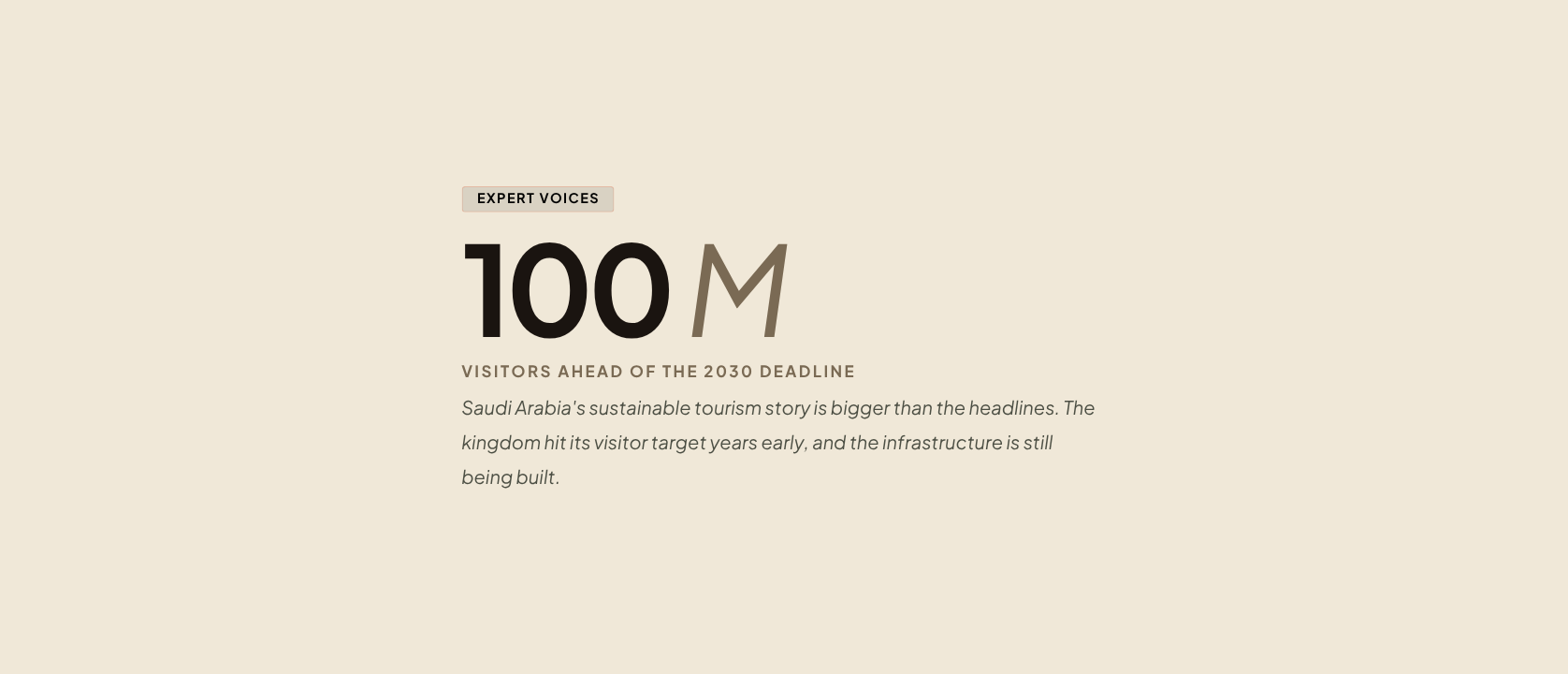
100 million visitor target reached
Saudi Arabia achieves its 2030 visitor goal years early, even as airport expansion and accommodation capacity are still catching up.
-
Sustainable Design in Action
Sindalah and Amaala open as showcases
Both destinations integrate seamless travel, sustainable practices, and technology, drawing early visitor praise for their environment and ease of access.
-
Red Sea Coastline
Solar power and recycling systems come online
Red Sea Global builds recycling and solar energy systems into new resorts, keeping visitor loading within limits while coral reef ecosystems remain protected.
-
Heritage Site Management
AlUla introduces daily visitor caps
Limited daily visitor numbers protect archaeological sites while AlUla becomes one of the country’s fastest-growing regions for tourist spending.
-
Regional Expansion
Alwaj and Jubbah grow alongside mega projects
Smaller destinations benefit from new airports and infrastructure, with Jubbah’s UNESCO-listed rock art and Dakar Rally route drawing adventure travelers.
-
2027 to 2034
Global events accelerate growth
The Asia Cup (2027), Riyadh Expo (2030), and FIFA World Cup (2034) anchor a decade of sustained international visitor growth across the kingdom.
Sindalah and Amaala Show What Sustainable Design Looks Like
Two projects keep coming up when Al-Otaibi talks about sustainability in practice: Sindalah and Amaala. Both reflect the three pillars of the national tourism strategy: enhanced customer service, sustainability, and technology integration, which together add up to what he calls seamless travel.
Sindalah, in particular, has become something of a showcase. Al-Otaibi says visitors who have been there consistently highlight the island’s sustainable practices, easy access, and calm, attractive landscapes. For a destination that opened relatively recently, that kind of feedback matters. It signals that sustainability is not an afterthought bolted onto the marketing, but part of how the place actually functions day to day.
Solar Energy and Coral Reef Protection Along the Red Sea
The Red Sea coastline is home to coral reefs that are central to the region’s biodiversity, and Al-Otaibi is direct about the trade-offs involved in developing tourism there. More visitors inevitably mean more pressure on energy, water, and waste systems.
To manage that, Red Sea Global has built recycling systems into its projects and leans heavily on solar power for energy generation. Because the development only opened its doors recently, visitor numbers remain within what Al-Otaibi describes as acceptable limits, and the management system tracks guest needs in advance to keep consumption and waste under control as the destination scales up.
Why AlUla Caps Its Daily Visitor Numbers
Not every sustainability measure involves solar panels or recycling plants. Sometimes it is simply about limiting how many people can visit a site on a given day. AlUla, with its archaeological heritage and limited physical space, now restricts daily visitor numbers to protect what makes the site valuable in the first place.
Al-Otaibi frames this as part of a broader requirement: every new destination has to submit a sustainability plan before development begins, setting out how it will manage its environmental footprint from day one. AlUla’s approach to visitor caps is one example of that requirement in action, and it has not stopped the site from becoming one of the country’s fastest-growing tourism regions.
Alwaj and Jubbah: Sustainable Tourism Beyond the Mega Projects
Mega projects still dominate the conversation, but Al-Otaibi points to a quieter trend running alongside them: the growth of smaller regional destinations that benefit from the same infrastructure push. Alwaj, a town near the Red Sea project that now falls under Red Sea Global, has gained a new airport and started attracting visitors of its own.
Further north, Jubbah is emerging as another example. The town is registered with UNESCO for rock art dating back more than 7,000 years, and it sits along the route of the Dakar Rally, giving it a built-in audience of adventure travelers. Al-Otaibi expects these secondary destinations to keep developing in tandem with the larger projects, not instead of them.
Sustainability Approaches Across Saudi Destinations
How four very different projects manage growth responsibly
Sindalah & Amaala
Mega ProjectSustainability FocusTechnology-driven operations built around seamless travel and enhanced customer service from day one.
Visitor ManagementEarly visitor feedback highlights ease of access and a calm, well-managed environment.
Red Sea Project
Mega ProjectSustainability FocusRecycling systems and solar-powered energy generation protect coral reefs and coastal ecosystems.
Visitor ManagementGuest needs tracked in advance to keep consumption and waste within limits as the destination scales.
AlUla
Heritage SiteSustainability FocusMandatory sustainability plan required before development, addressing energy, water, and waste impact.
Visitor ManagementDaily visitor caps preserve archaeological sites with limited physical space.
Alwaj & Jubbah
RegionalSustainability FocusGrowth tied to existing mega project infrastructure rather than standalone development, limiting new footprint.
Visitor ManagementUNESCO-listed heritage at Jubbah and Dakar Rally access channel visitors toward niche, lower-volume experiences.
The Be My Guest Program Brings Communities Into the Picture
Sustainability, in Al-Otaibi’s framing, also has a social dimension. Creating jobs for local communities is one of the core aims of the national tourism strategy, and that shows up in practical ways: residents work at the new destinations, sell locally made products, and feed feedback back into how sites are run.
One initiative stands out. Through the Be My Guest program, local families host visitors in their own homes, sharing meals, customs, and stories. For Al-Otaibi, this kind of exchange is what keeps Saudi Arabia’s growth from feeling like development for its own sake. It ties the visitor experience back to the people who actually live in these regions.
What Sustainable Tourism Growth Means for the Region
The numbers behind this push are hard to ignore. Saudi Arabia hit its target of 100 million visitors years ahead of the original 2030 deadline, even while airports, accommodation, and full destination infrastructure are still being completed. Al-Otaibi believes that once those gaps close, the country could double its visitor numbers and compete directly with established global destinations.
An air connectivity initiative is working to bring more international airlines into Saudi airports, positioning the kingdom as a regional hub rather than a side trip from Dubai. With the Asia Cup arriving in 2027, Riyadh Expo in 2030, and the World Cup in 2034, Al-Otaibi argues the timing for investment in Saudi tourism has rarely looked better, especially for consultants willing to look past headlines and study what is actually happening on the ground.