Based on an Infoquest Expert Voices interview with Chris Hyde, School Principal and International Education Consultant
The debate around UAE and UK education reform is rarely about who is doing it wrong. It is about who is doing different things well, and whether either system has the humility to look across the aisle. The UAE is moving fast, investing heavily, and willing to rebuild from first principles. The UK is methodical, historically deep, and anchored by institutional knowledge that takes decades to accumulate. Both are right about some things. Both have real blind spots. And according to Chris Hyde, a school principal who has led institutions across England, Egypt, and South Africa, the most effective systems are the ones that resist the temptation to replicate someone else’s model wholesale.
Two Systems, Different Speeds
The UAE and the UK approach reform from fundamentally different positions. The UAE is an emerging system moving at pace, willing to make bold commitments, restructure curriculum frameworks, and draw from global best practice without the drag of a century-old institutional identity. The UK has depth, nuance, and a long track record, but it can be slow to adapt, constrained by legacy structures and professional caution.
Hyde sees both tendencies clearly from his years working across geographies. “They all operate differently,” he says of school systems around the world. “They all have their own individual quirks and ways of doing things.” The core of schooling is universal. But what you choose to build on top of that core is where one system can teach the other something genuinely valuable.
The UAE’s Appetite for Change Is an Asset the UK Should Study
The UAE’s willingness to commit fast is something the UK could afford to borrow. While UK institutions debate AI policy, many UAE schools are already investing in, building, and deploying AI. Hyde is unambiguous about AI integration: it is “a resource” that all teachers should use. Administrative efficiency, lesson planning, and differentiated resources are tasks AI can handle, freeing educators to focus on what technology cannot replace.
He points to practical tools already in use, including MidJourney and Sphinx AI, which dramatically cut preparation time and allow teachers to generate materials tailored to individual learning levels. The time savings are substantial. But the deeper point is cultural: schools that treat AI as a threat fall behind schools that treat it as a tool. The UAE’s default posture of decisive adoption gives it an advantage that the UK is still working to match.
UAE vs. UK: Strengths, Gaps, and What Each Can Borrow
An expert assessment across six dimensions of school system reform
Decisive, rapid investment with top-down commitment to transformation
Early and aggressive adoption — AI tools in classrooms ahead of policy
Building out welfare frameworks; lacks the depth of boarding school tradition
Younger system; still accumulating institutional knowledge and cycle experience
Drawing from Far Eastern rigor; risk of importing models without cultural fit
System change is moving faster than cultural adjustment in some institutions
Methodical but slow; legacy structures create friction around overdue changes
Cautious adoption; most teachers use AI but policy frameworks lag behind
Boarding school pastoral tradition is unmatched globally — a model to study
Deep institutional memory; understands why systems are built the way they are
Strong Scandinavian influence; holistic character development well-established
Reform moves with cultural adjustment — change sticks when it finally comes
Why Emerging Systems Should Not Directly Copy Mature Ones
Far Eastern education models, particularly Singapore and South Korea, are often cited as the frameworks the UAE looks to. They deliver results. But Hyde’s cross-geography experience points to a risk: those systems work partly because of deeply embedded cultural values around academic achievement. Those values cannot simply be installed. “The best bits of each part” is how Hyde describes what he tries to extract from every institution he leads or inspects. Selective borrowing, not wholesale imitation.
The Scandinavian approach, which prioritizes social-emotional learning and character development over test performance, offers a useful counterweight. For UAE schools investing in student wellbeing and holistic development, this tradition provides a framework that the pressure-heavy Far Eastern model does not.
The Selective Borrowing Framework for Education Reform
How school leaders can draw from global models without replicating them wholesale — derived from Chris Hyde’s cross-geography experience
Complete at least one full cycle inside any system before proposing changes. Understand not just what exists, but why it exists. Processes that look inefficient often exist for reasons that aren’t immediately visible.
Not every strength is transferable. Assess whether a practice works because of its system design or because of the culture that surrounds it. Cultural dependencies cannot simply be transplanted.
Adapt borrowed elements to the local context. Wholesale replication ignores the ecosystem that made a model work. The goal is selective adoption that strengthens what already exists, not replacement of it.
System change without cultural alignment produces surface compliance. Culture change without system support produces frustration. Both must advance together — and community (parents, staff) is the mechanism that holds them in sync.
What the UK Gets Right That the UAE Should Not Rush Past
Hyde’s single most insistent piece of advice for school leaders is simple: never rush changes. “Always look at something and make sure you go through a full cycle to understand why it’s been implemented in that way in the first place.” This is institutional wisdom that the UK has earned. Its slower pace is frustrating from the outside, but it reflects an understanding that school systems are fragile ecosystems. Change one part without understanding the whole, and unintended consequences follow quickly.
Pastoral care is another area where the UK leads. The boarding school tradition in particular produces a quality of student support that Hyde says is “second to none” and cannot be replicated in a standard day school setting. For UAE schools building out welfare frameworks, this depth of pastoral practice is worth studying closely rather than improvising around.
Culture vs. System: The Gap That Derails Reform
One of Hyde’s sharpest observations is about the gap between changing a system and changing the culture inside it. Post-COVID, he decided on one school that transformed community relationships: he invited parents onto the school site rather than keeping them at the gates. The result was a win-win. Children benefited, teachers built relationships with families, and parents began contributing their expertise directly to the school. It costs nothing beyond a shift in default assumption.
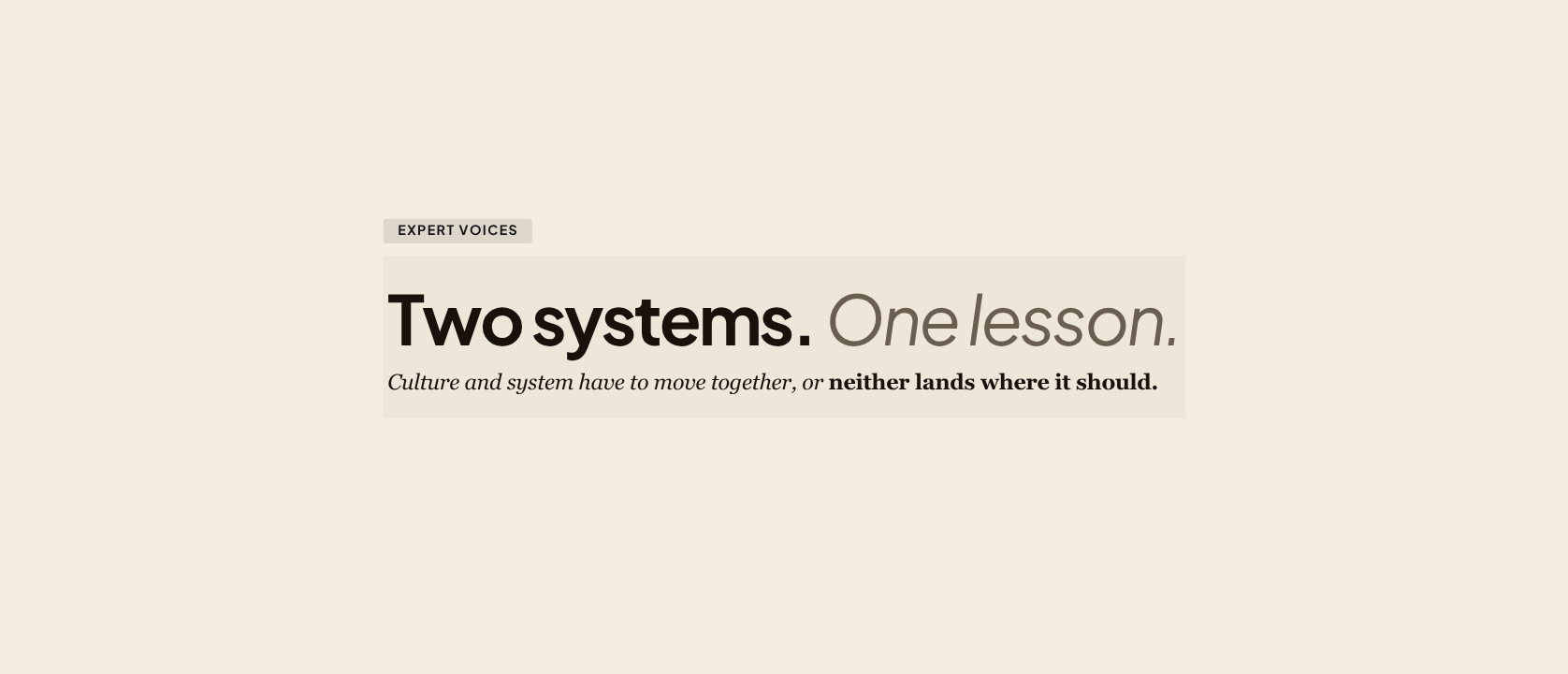
Both the UAE and the UK face versions of this challenge. In the UAE, rapid system change can race ahead of the cultural adjustment needed to make it stick. In the UK, institutional conservatism can block plainly overdue changes. The answer is the same in both contexts: culture and system have to move together, or neither lands where it should.
Human Agency in an AI-Automated Education World
Hyde sees AI transforming education in two waves. In the short term, it reduces administrative overhead, supports teachers with planning and marking, and eliminates the need for certain roles that were previously filled by human staff. Longer term, he anticipates something more significant: AI-powered earwear or glasses providing personalized, one-to-one learning support in real time, making bespoke education accessible at scale.
But he is clear about what technology cannot replace. Face-to-face human contact, especially for younger children, is foundational. “The social communication that most children need when they’re younger” cannot be replicated by a screen or a device. The risk for both the UAE and the UK is not AI itself. It is reaching for AI adoption as a signal of modernity before the pedagogy is ready to hold it.
The Road Ahead: What Both Systems Should Borrow
The UAE needs the UK’s institutional patience and its pastoral depth. The UK needs the UAE’s appetite for change and its willingness to look beyond its own traditions. Neither should replicate the other directly. The strongest education leaders, in Hyde’s view, are the ones who resist the pull of any single model and instead build deliberately from the best elements they have seen work across different contexts. That is the standard both systems need to hold themselves to now.