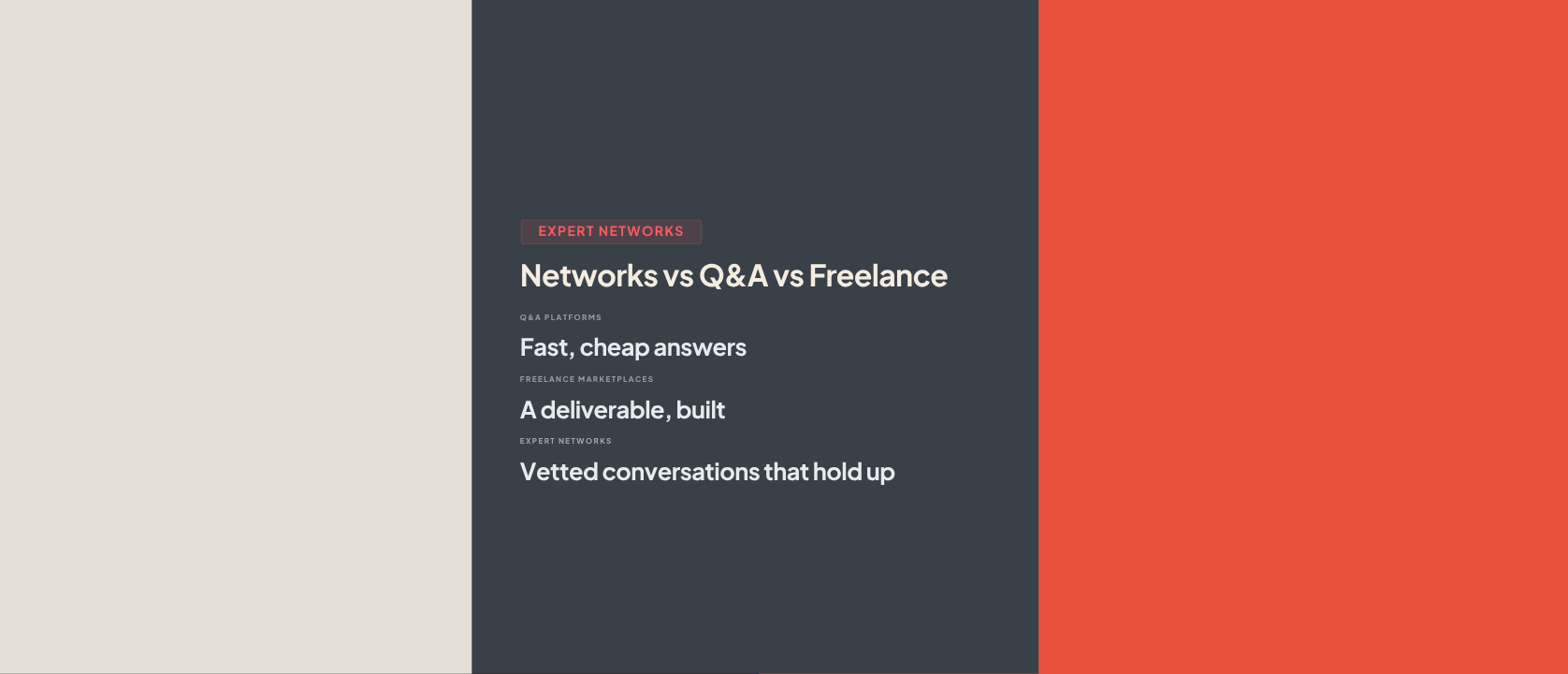
Expert networks, Q&A platforms, and freelance marketplaces solve different problems: networks deliver vetted, compliance-controlled conversations with screened professionals for high-stakes research; Q&A platforms deliver fast, low-cost answers to discrete questions; freelance marketplaces deliver execution, work products, not conversations. Choosing between them comes down to stakes, verification needs, and whether you’re buying an answer, a dialogue, or a deliverable.
We operate in one of the three categories compared here; the framework is written so the other two win where they should.
The Three Models, Defined
Expert networks (GLG, AlphaSights, Guidepoint, Infoquest, and peers) arrange live consultations with vetted professionals, current and former executives, operators, clinicians, specialists, under vetting, compliance, and confidentiality frameworks. The product is a structured conversation with a verified person, sourced from a database or custom-recruited against your brief; the buyers are firms whose decisions carry real stakes.
Q&A and expert-exchange platforms (JustAnswer and similar advice sites, plus community models from Quora to specialist forums) deliver written answers to discrete questions, typically fast and inexpensive, from self-registered experts whose credentials the platform checks lightly or not at all. The product is an answer, asynchronous and unverified at the level a professional buyer would require.
Freelance and expert marketplaces (Upwork, Fiverr, Toptal, Catalant, and specialist peers) match you with independent professionals for defined work: analysis, modeling, design, coding, and interim capacity. The product is a deliverable and an ongoing working relationship, expertise applied over days or weeks, not extracted in an hour.
The confusion between the three is natural; all market themselves as “access to experts”, but they differ on exactly the dimensions that matter when something rides on the answer.
Vetting and Compliance: Where the Models Diverge Most
The sharpest difference isn’t price or speed; it’s verification. Expert networks verify identity and employment history, screen conflicts and sanctions, obtain signed compliance attestations, and run MNPI controls with audit trails; the standard is documented in our expert network compliance guide. Q&A platforms range from basic credential checks to none, appropriate for low-stakes questions, inadequate for anything where the answerer’s identity and independence matter. Marketplaces sit between: portfolios, reviews, and payment protection verify capability to deliver, but not the confidentiality and conflict frameworks that regulated research requires. The practical test: if your compliance team would need to see vetting records, only one of the three models produces them.
What Each Model Costs (Structurally)
The three price in different currencies. Q&A platforms charge small per-question or subscription fees; the cheapest access to an answer, priced for consumers. Marketplaces charge hourly or per-project rates set by each freelancer, plus platform fees; you’re buying labor time, and cost scales with scope. Expert networks price per consultation, by credit or subscription, or on flexible per-brief packages, a professional-grade premium that buys vetting, sourcing, compliance, and speed, not just the conversation. Within the network category itself, structures vary widely, and commitments are the biggest hidden cost, challenger models like Infoquest’s flexible packages with no commitments run roughly 30% below legacy rates. Full network fee structures are in our pricing models guide.
Decision Matrix: Which to Use, by Project Type
Strategic research, diligence, or investment decisions → expert network. Stakes and compliance requirements rule out unverified sources; you need screened humans, fresh perspectives, and records. Custom-sourcing networks extend this to niche and regional profiles; Infoquest delivers custom-sourced expert lists in under 2 hours for exactly these briefs.
A discrete factual or how-to question → Q&A platform. When the answer is checkable, and the stakes are personal or operationally small, paying network rates would be absurd. This is the category’s legitimate terrain.
A deliverable, model, analysis, design, code → freelance marketplace. Networks sell conversations, not work products. If you need something built, buy building.
Ongoing advisory over months → depends on formality. Networks place vetted longer-term advisors under compliance frameworks; marketplaces (Toptal, Catalant) place fractional professionals for embedded work. Formal governance needs favor the network route.
Surveys and quantitative studies → expert networks and specialist panels. Sample provenance is the whole game; self-registered Q&A populations can’t provide it.
Market orientation on a budget → sequence them. Cheap sources first to frame the question, the network for the calls that actually move the decision, the same logic as any research stack, covered in our guide to choosing an expert network.
FAQ
Match the site’s verification level to your stakes: for consumer-grade questions, established Q&A platforms with credential checks are adequate; for professional research where the expert’s identity, seniority, and independence matter, use a vetted expert network; the reliability you’re paying for is the screening, not the conversation. A comparison of vetted providers is in our overview of the best expert networks.
When decisions carry real stakes, yes, the premium buys verified identity, conflict screening, compliance records, and sourcing precision that Q&A models structurally can’t offer. When the question is small and checkable, no, that’s what Q&A platforms are for. The honest answer is that they’re not substitutes; they’re different products.
For deliverables, marketplaces are usually the better tool; for research conversations under confidentiality and compliance controls, they aren’t built for the job. Teams often use both: a network to understand the market, a marketplace to build what the understanding calls for.
Sequence by stakes: free and low-cost sources (published content, Q&A platforms) to frame the question, then paid expert conversations only for what remains. Within networks, commitment-free structures keep costs mapped to actual usage, the biggest savings lever in the category.
On Q&A platforms and marketplaces, you largely rely on the platform’s checks and public footprint. Expert networks do this professionally: identity and employment verification, conflict and sanctions screening, and signed attestations before any engagement, ask any provider to show you the process in writing.